The Curious Case of the Player to Be Named Later
David Rainey • July 19, 2025
It’s that time of year again. The excitement of All-Star weekend and the Homerun Derby are behind us, and it’s on to the second half of the MLB season. This is the time where the great teams separate themselves from the good teams. It’s the time for teams to show whether they should be considered contenders or pretenders. And with this time of the year, of course, comes the MLB trade deadline. Arguably the most intriguing trade deadline of all the major sports. Fringe teams will have to decide whether to be buyers or sellers, and the great teams will mortgage their futures for one player they believe will take them to the promise land. Now, as out of left-field as the ending to this year’s All-Star weekend was (raise your hand if you also weren’t aware that swing offs were a thing), the MLB trade deadline features something much more curious. The Player to Be Named Later.
You see, as most of us know, it’s extremely common in Major League Baseball for a team like the Padres, for example, to sell off a handful of their top prospects at the trade deadline for a lefty reliever they hope will help them navigate the difficult waters that is the postseason. But what some people aren’t aware of (outside of us baseball nerds of course) is the use of something, or someone more specifically, called the “Player to Be Named Later (PTBNL)” in these trade scenarios.
For those of you who don’t know, here’s a quick explanation of what exactly the phrase “Player to Be Named Later” means. In baseball, when a team isn’t sure exactly which prospect they want in return or when they are trying to finesse the roster management rules, they will accept a “Player to Be Named Later” in return in a trade. This gives that team the opportunity to further evaluate players and choose who they want in return at a later date. This doesn’t mean that the team will just be able to choose a superstar down the road, there are limitations placed on who can be chosen, and most of the time the player ends up being just another player lost in baseball lore. However, sometimes these PTBNL turn out to be more than just a journeyman or even lead to oddities that only baseball can provide.
So, what are the most famous cases of Players to Be Named Later?
Well, I’m glad you asked. Let’s start with the not so unexpected scenario that actually led to the PTBNL rules to be changed.
Trea Turner
Before 2015, there was a rule in place in the MLB in which prevented players from being traded for a year after being drafted. Trea Turner was drafted by the San Diego Padres in the first round of the 2014 Draft which meant, you guessed it, he wasn’t eligible to be traded until the following year. However, in December of 2014 the Padres, Nationals, and Rays agreed to mega-deal that involved 11 players AND a Player to Be Named Later. So, what does this have to do with Turner? Well, everyone was aware of who that PTBNL would be. Trea Turner. But as I mentioned before, he wasn’t allowed to be traded yet. So Turner had to spend the beginning of the next season playing for the Padres who had already traded him. This led to a rule change in MLB before the next draft to avoid this situation ever playing out again.
But where is Trea Turner now? He’s certainly no journeyman. He had an incredible start to his career with the Nationals, before being traded (again) to the Dodgers with Max Scherzer in 2021. He eventually signed a $300 million deal with the Phillies where he still plays and remains one of the best players in Major League Baseball. But is he the best PTBNL of all time? Not quite.
David Ortiz
Big Papi.
Ever heard of him? Sure you have. But did you know he wasn’t always the mashing lefty for the Red Sox that we know and love? That’s right. Early on in David Ortiz’s career he actually struggled to find a place in the league; and at one point, was even a Player to Be Named Later in a trade. He actually started his career with the Seattle Mariners, but he doesn’t mean much to the Mariners franchise outside of being a PTBNL in a trade in 1996 with the Minnesota Twins for Dave Hollins. As a matter of fact, not only was Ortiz not the player we know on the field, he wasn’t even David Ortiz on paper. At the time, he was actually known as David Arias.
You might be thinking, “Wow. The Mariners really traded BIG PAPI.” Trust me when I tell that the Twins feel even worse. Ortiz would play a handful of seasons for the Twins from 1997-2002; however, even after a solid season in 2002 with the Twins, they would go on to RELEASE Ortiz. That’s right. Even one of the greatest players to ever step foot on a baseball diamond was not only traded as PTBNL but was also outright released.
Of course in 2003, David Ortiz would go on to join the Boston Red Sox.
Ten All-Star games, 3 World Series Championships, a World Series MVP, and a Hall of Fame selection later, David Ortiz would go down in baseball history as one of the most feared batters of all time, and the legend we know him as today Big Papi.
What is the oddest Player to Be Named Later situation?
There is a rare, but always delightfully bizarre situation in which a player is traded for himself as a Player to Be Named Later. This hilariously absurd scenario is so rare that it has only happened four times in the history of Major League Baseball.
- Harry Chiti – traded from the then Cleveland Indians to the Mets in 1962 for a PTBNL. However, he was so bad that the Mets decided trade him back to Cleveland as the PTBNL
- Brad Gulden – traded (with $100,000) from the Yankees to the Mariners for Larry Milbourne and a PTBNL in 1980. Once again, he performed so poorly that the Mariners traded him back to New York as the PTBNL in the original trade. Are you sensing a theme?
- Dickie Noles – In 1987 the Cubs traded him to the Tigers for a Player to Be Named Later. Sadly, he didn’t do enough during the Tigers playoff run that year for them to want to keep him around. So, they shipped back to the Windy City to complete the trade as the PTBNL.
- John McDonald – The most recent example. He was acquired by Detroit, who clearly didn’t learn anything in 1987, from the Blue Jays in 2005 for, that’s right, a PTBNL. Later that year, he was sent back to Canada for cash considerations.
There you go. Next time you’re hanging out with your buddies on the back porch naming random athletes from your pass, feel free to drop in a “Dickie Noles” reference and explain the wonderful scenario of him being traded for himself.
Baseball is such a beautiful sport in so many ways. For many of us, it’s the first sport we play as children, or the sport we remember watching with our grandparents on the living room floor. It has such an iconic and rich history. It’s known as “America’s past time” for a reason. But throughout that history, there are so many things that have happened that can only be described as strange and uniquely baseball. And that’s why we love it.
So, when you’re scrolling social media or watching ESPN this trade deadline season and see that stud middle reliever traded for nothing but a Player to Be Named Later, maybe you won’t just brush it off this time around. Maybe you’ll wait to see who that player becomes, and maybe they’ll end up being another great piece of baseball trivia.
A quick share helps us a lot!
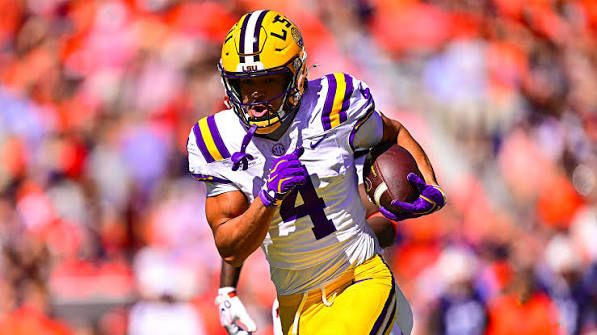
Fresh off their first shutout of the season, LSU took a road trip to the Plains to take on an Auburn team that was on top of the world. While a 31-0 victory over Mississippi St was certainly impressive for Lane Kiffin’s team last week, fellow first-year head coach, Alex Golesh, secured his first marquee win for his Tigers with a 27-24 upset win over the #1 ranked Georgia Bulldogs in Athens.With all of the momentum in the world, the question was whether or not they could stay hot against LSU or were they do for a hangover. Sam Leavitt and company did their part to make sure it was the latter, showing up in Jordan-Hare and dominating Auburn with an explosive offensive showing for a 38-17 victory. That score included a late touchdown by Golesh’s Tigers that made it look even closer than it actually was. The win improved LSU to 6-2 overall (3-2 SEC) and propels them in to their bye week for some much needed rest. Auburn dropped to 4-3 overall and now sit below .500 with a 2-3 record in the SEC. Kiffin’s team faces a two game gauntlet coming out of their bye as Alabama and Texas come to Baton Rouge in consecutive weeks for what will essentially be playoff elimination games. The Tigers carried over their momentum from their shutout win over the Bulldogs last week, racking up 552 yards of total offense, while only allowing 271 on defense. Leavitt was phenomenal, finishing 32-45 for a career-high 387 yards and 3 touchdowns through the air. Despite his compromised hamstring, he still found a way to add 54 yards rushing and another touchdown on the ground Jackson Harris continued his ascent as one of the top wide receivers in the SEC, delivering a 178 yard, 2 touchdown performance on 9 receptions. He’s been outstanding since week 4. In the first 3 weeks of the season, he only had 5 receptions for 117 yards and 0 TDs. Starting against Texas A&M in week 4, he now has 31 receptions for 517 yards and 7 TDs in five games. Leavitt needed someone to step up as his top target after Trey’Dez Green went down in that week 3 loss ot Ole Miss. Harris has done just that. Speaking of Green, he returned a couple of weeks earlier than anticipated. When the first injury report came out last Wednesday and he was noticeably absent, it came as a giant surprise. Everyone then began to wonder how recovered is he actually, and how much would he play. He was out there from the very beginning and ended up playing 49 of 83 offensive snaps, hauling in 5 receptions for 50 yards and a touchdown of his own. His return, along with Harris’s emergence, is exciting for Kiffin’s offense. Game Flow The explosion started slow, as it typically seems to do for this LSU offense. After Auburn went 3 and out on the opening possession, drove down for a field goal, which was answered by Golesh’s Tigers. Leavitt and the offense would then be off to the races from that point on, scoring their first of 4 touchdowns in the 1st half. While about to get drilled in the pocket, the Tiger quarterback hung in there and delivered a perfect throw over the middle for Harris’s first touchdown of the day to jump to a 10-7 lead. After three consecutive 3 and outs between both teams, LSU’s most impressive drive of the day came on a 14 play, 95 yard touchdown drive that was capped off with Green’s 15-yard score to go up 17-3. That drive included a gutsy 4th down conversion in their own territory on a beautifully drawn up trick play by Charlie Weis Jr. Auburn was finally able to answer, as Byrum Brown orchestrated an 11 play, 75 yard touchdown drive. His running ability was the biggest concern for Blake Baker’s defense going in to this game and he showed why with a 34-yard run to make it 17-10. With a little less than 6 minutes left in the first half, LSU had the chance to milk one final scoring drive before getting the ball to start the second half, but Harris had other plans. On a 3rd and 5, he caught the ball on a middle crossing route and turned on the jets to outrun two Auburn defenders on his way to a 70-yard touchdown, his second of the day. After another quick 3 and out for Brown and his offense, LSU then got their milked final drive, going 74 yards on 10 plays, capped off by Leavitt’s fourth touchdown, a 4-yard run to give his Tigers a 31-10 halftime lead. While scoring came to a halt in the 3rd quarter, it became the LSU defense show, as Baker’s unit smothered the Auburn offense. Golesh’s Tigers were only able to manage 67 rushing yards, far short of their 182 yard per game average. What the Tigers were able to do against Brown and his legs was a mirror of what they did to Marcel Reed a few weeks ago. The big Auburn QB finished with just 21 yards rushing on 19 carries and was sacked a whopping 6 times. He wasn’t much better through the air, finishing 15-24 for only 160 yards. Jordan Ross showed up big for the second week in a row, accounting for 2 of the sacks on Brown and 2.5 tackles for loss. The SEC’s second-leading sacker, Princewill Umanmielen, returned from his head injury that knocked him out of the Mississippi St game after just 7 plays and recorded a sack and 1.5 TFLs of his own. LSU’s final nail in the coffin came early in the 4th quarter on a 7 play, 67 yard drive that resulted in a 12-yard touchdown run by Dilin Jones. While Leavitt, Harris, and Green garnered much of the praise, and deservedly so, Jones produced yet another outstanding day on the ground. He finished with 92 rushing yards on 21 carries for a 4.4 yards per carry average, while adding 4 receptions for 27 yards. His touchdown made it 38-10. Auburn was able to get the garbage time touchdown after backup QB, Tristan Ti’a took over and scrambled for a 7-yard run to make it 38-17. The score came with just 24 seconds left in the game. Summary It was LSU’s most complete game of the year. Although the shutout over the Bulldogs was nice the week prior, it came against a backup quarterback and at home. This win at Auburn secured Kiffin’s first SEC road win as the head coach of the Tigers. It also snapped a 735 day streak since LSU’s last conference road win, which came on October 19, 2024 when the Tigers defeated Arkansas in Fayetteville. Kiffin’s team will head in to their bye week as preparations begin for a critical matchup in Tiger Stadium on November 7th. The #10 ranked Alabama Crimson Tide will travel to Baton Rouge for a 2:30 pm kickoff. With both teams sitting at 6-2, next Saturday is likely a playoff elimination game.